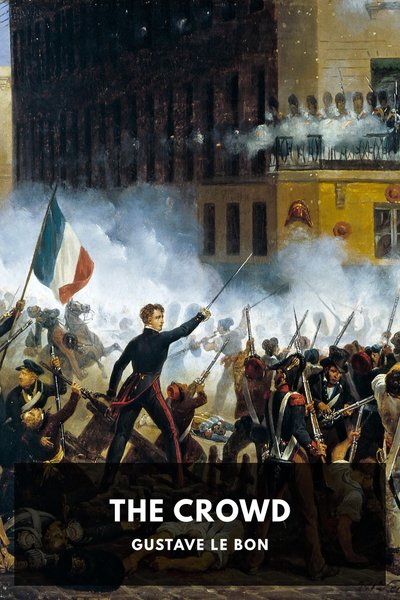
The Crowd
by Gustave Le Bon
Le Bon explores the psychology, motivations, and dangers of crowds of people.
Subjects
About This Book
The world of the 18th and 19th centuries had been wracked by change and revolution. Gustave Le Bon, a doctor by trade but wandering philosopher by avocation, was a first-hand witness to one such revolution: the establishment of the Paris Commune in 1871, in which a crowd of mutinous National Guardsmen seized the city and established a socialist government for two brief months in what Engels called one of the first examples of a “dictatorship of the proletariat.”
After that revolution, Le Bon left to travel the world, developing his theories on the psychology of crowds. The Crowd is his distillation of that philosophy, and one of the earliest treatises exploring the behavior and motivations of crowds of people.
In it, Le Bon posits that with the rise of democracy and industrialization, it’s the unreasoning crowds who will control the affairs of the people, not kings or the elite; and these crowds are largely irrational in action, conservative in thought, violent both in act and in speech, and easily hypnotized by individuals with prestige but not intelligence.
Le Bon is ultimately cynical in how he views this development in human affairs. Individuals in crowds feel anonymous and powerful, leading to destruction and violence; and the susceptibility of crowds to pure charisma means that they’re easily dominated by thuggish men of action, not wise men of foresight. People in a crowd are “a grain of sand amid other grains of sand, which the wind stirs up at will.”
His conclusion is that the increasing relevance and power of crowds in modern society will lead to negative outcomes in the long term. In his view, democracy can only lead to more and more violent crowds, who demand charismatic figureheads to give them meaning.
As one of the earliest examples of the study of crowd psychology, The Crowd was a direct influence on many titanic figures in 20th century history, including Theodore Roosevelt, Freud, Mussolini, Lenin, and Hitler.
Download Formats
Public domain in the United States. Users located outside of the United States must check their local laws before using this ebook. Original content released to the public domain via the Creative Commons CC0 1.0 Universal Public Domain Dedication.